Heuristics
One-page rules for operations and supply chain, from a practitioner who keeps learning and applying them.
In 2021, I decided to strengthen my intellectual muscles and began a PhD journey in Logistics and Telematics. My initial research focused on developing a framework for designing and deploying autonomous supply chain systems. A few years later, LLMs entered the picture. Several sparring sessions with ChatGPT made me rethink my approach, leading me to withdraw from my studies in 2025 and launch the Automatiqa Lab project. But the appetite for research didn't disappear with it - it just got blended with the real life of operations and supply chain strategy.
That blend produced this series of one-page heuristics. Each one contains key definitions, rules and principles, test cases, and awareness of potential mistakes. They aren't blind frameworks, but rather strategic reflections of a conscious practitioner.
// anatomy of a heuristic
Problem
Where the rule found me and what it looks like on the shop floor.
Why it's hard
The forces that keep it unsolved - what every fix costs.
Rule
One instruction, in the imperative. What to do when the test says yes.
Test + run on
How to tell it applies to you, then the rule run on one real case.
Mistakes
The ways the rule gets misapplied - most of them ones I made.
Maxim
One line to carry it out of the room.
// published
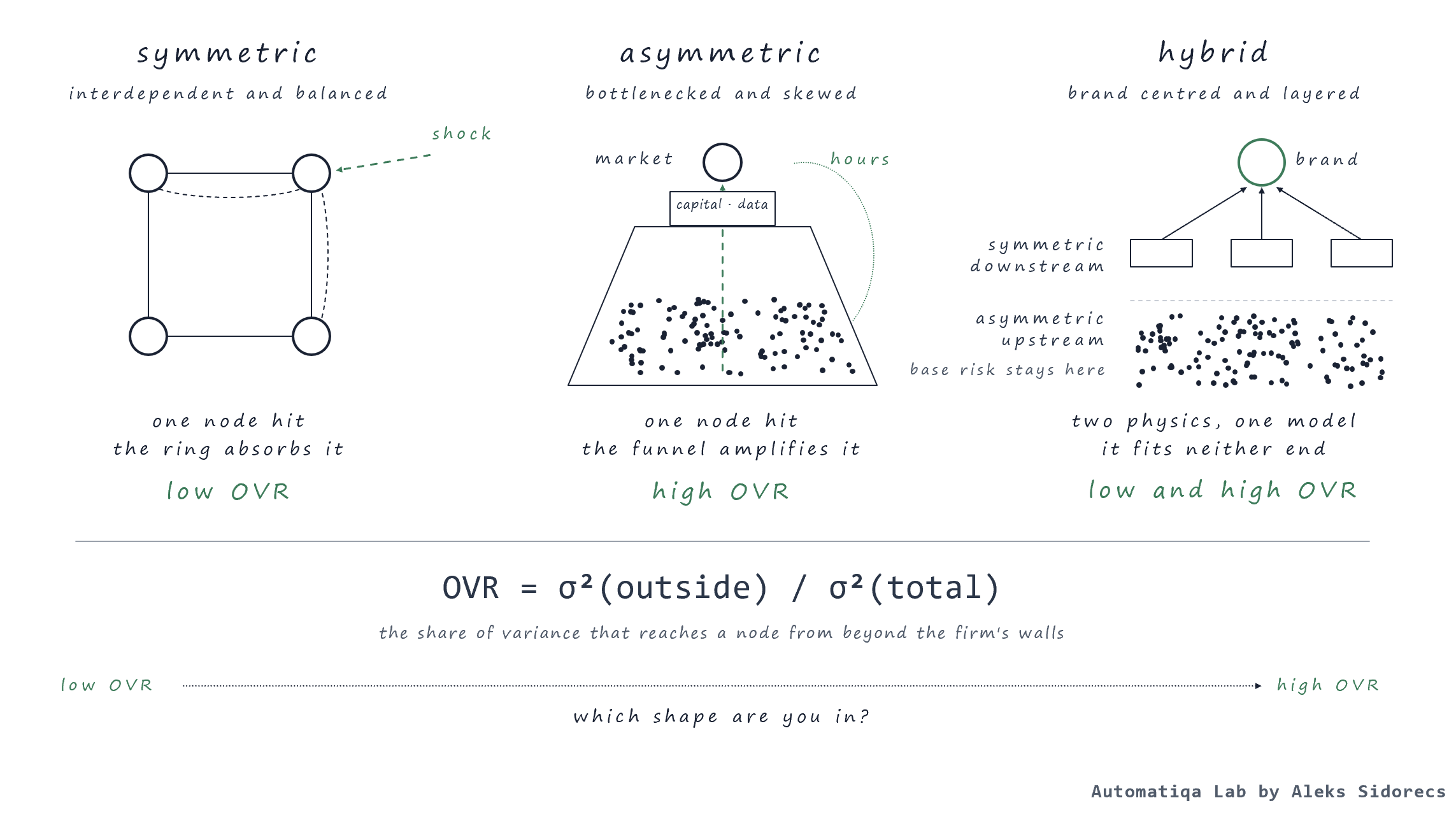
Asymmetric supply chain physics
Symmetric vs asymmetric supply chains, and the Outside Variance Ratio that tells you which one you're in.
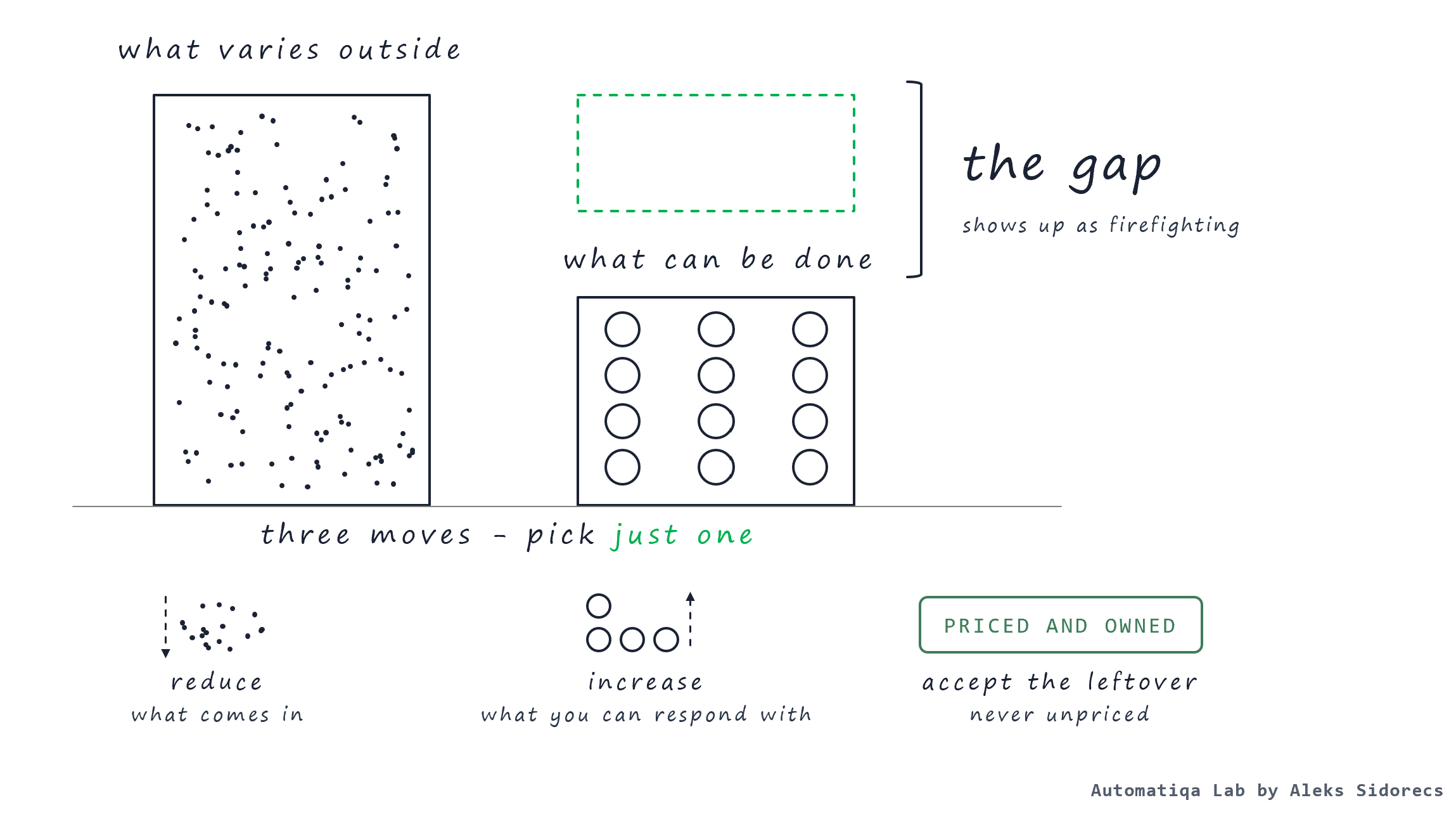
Requisite variety in supply chain
Any operation can absorb only as much variation as it has responses for. The Variety Shortfall Test finds where it loses.
// in the drawer
Assess the loop, not the company
Company AI readiness scores the wrong unit.
Dissolve the problem, don't optimise the supply chain
Operations optimise around problems instead of removing them.
The same writing is mirrored as markdown at github.com/alxsidr/heuristics, licensed CC BY 4.0. Feed: /heuristics/rss.xml.