Operating models were designed for people to run.
Now the algorithm is in the loop.
Most operating models still assume a human at every decision point and software that waits to be told. That assumption is breaking. I work on what replaces it - how supply chains, physical operations, business architecture and AI are redesigned together.
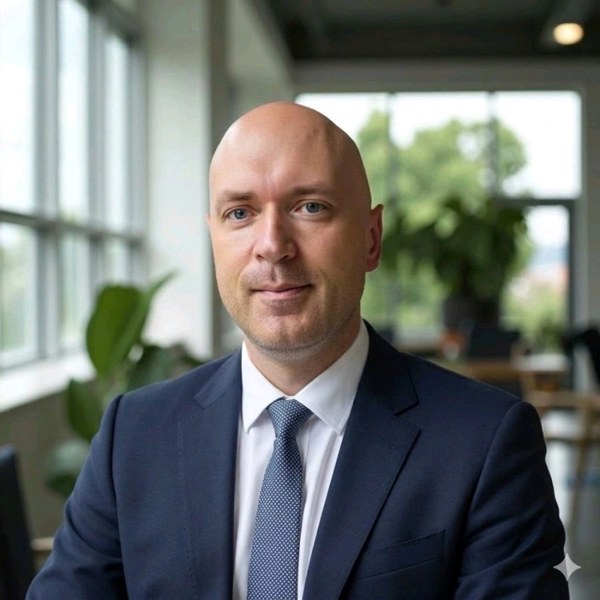 Aleks Sidorecs
Supply Chain, Operations and Technology Transformation Leader
Aleks Sidorecs
Supply Chain, Operations and Technology Transformation Leader
// three things at once
Operating models
Who decides, at what speed, with what information - the design of the loop itself, not the org chart around it.
Physical operations
Two decades in global supply chains, from P&G logistics to soft commodities. The rules here were paid for on real shop floors.
The algorithm
Agentic AI, orchestration and decision systems - where they belong in an operating model, and where they only add cost.
// insights
all insights →Articles, talks and interviews published elsewhere are being collected here.
The rules and arguments here are the practitioner's side. The tools that test them - agents, forecasting harnesses, document control, an orchestration kernel - are built in public at Automatiqa Lab, a separate lab I founded for exactly that.
The structural argument is the Intelligent Orchestration Manifesto. The vocabulary is in the Lab's glossary. The rules are here.